
If you’re looking at seasonal stays in Italy, you’ve probably already realised something important: you don’t want a frantic holiday where you “do Italy” like a checklist.
You want a proper exhale.
A home base.
A life rhythm that doesn’t involve dragging your suitcase over cobblestones every four days while pretending it’s “part of the charm.”
The big question is: how long should you stay? Two weeks? One month? Three months?
The answer depends on what you actually need – and how allergic you are to admin.
So let’s break it down in a way that’s practical, honest, and mildly entertaining (because if we can’t laugh at ourselves, what are we doing here).
This guide is for remote workers, creatives, slow travellers, and anyone considering seasonal stays Italy as a way to live differently for a while – without needing to sell all their belongings and announce a spiritual rebirth on Instagram.
First: what even counts as a “seasonal stay” in Italy?
A seasonal stay is usually longer than a holiday, shorter than a relocation.
Think:
- Long enough to unpack
- Long enough to find “your” cafe
- Long enough to stop checking Google Maps like it’s a life support machine
- Short enough that you can still go back to your normal life without a custody battle over your houseplants
Many seasonal stays in Italy happen in spring or autumn (for very sensible reasons, like: it’s not 38°C, and you’re less likely to be surrounded by 9,000 matching linen outfits).
The hidden truth: your nervous system needs time to arrive
Here’s the thing nobody tells you: your body doesn’t land when your plane lands.
Your nervous system needs time to:
- Stop bracing
- Stop scanning
- Stop living in “new place” alert mode
- Remember how to relax without scrolling for reassurance
This is why duration matters. A two-week stay can be wonderful – but if your aim is deep rest, clarity, or creative focus, the first week often doesn’t count. It’s basically admin with gelato.
So let’s look at the three options.
Option 1: 2 weeks in Italy (the “taste test”)
Best for
- People who want a reset but can’t disappear for long
- First-timers trying seasonal stays Italy for the first time
- Remote workers who can only take a short stretch away
- Anyone who wants to test rural life without committing
What 2 weeks is actually like
Week 1:
- Figuring out the kitchen
- Buying the wrong kind of coffee
- Discovering the supermarket closes when it feels like it
- Realising your “remote work accommodation Italy” has Wi-Fi that works brilliantly…in one specific corner near the staircase
Week 2:
- You finally relax
- You find a rhythm
- You realise you’ve been clenching your jaw since 2019
- You start sleeping properly and having suspiciously good ideas
The pros
- Easiest to plan
- Low commitment
- Great for testing a location, accommodation style, and your own “do I like this?” meter
- You can still get meaningful rest if you keep your schedule simple
The cons
- You might leave just as you’re settling
- It can feel like you did a lot of “arriving” and not enough “being”
- The benefits of slow living are real, but they’re just beginning
2-week best practice (to avoid turning it into a chaotic mini-tour)
- Pick one base, stay put
- Plan fewer day trips than you think you need
- Treat the first 3 days as decompression, not productivity
If you’re considering coliving for this length, this post helps set expectations: https://lavitasukha.com/coliving-italy/
Option 2: 1 month in Italy (the “sweet spot”)
If seasonal stays Italy had a greatest hits album, one month would be track one.
Best for
- Remote workers who want genuine focus + lifestyle reset
- People recovering from burnout (or near-burnout)
- Anyone wanting slow living without moving countries
- Creatives who want output without isolation
- People exploring rural living as a future direction
What 1 month is actually like
Week 1: arrival + logistics
Week 2: rhythm emerges
Week 3: deeper focus, deeper rest, less noise
Week 4: “Oh. This is what my life feels like when I’m not rushing.”
This is long enough for your system to actually shift.
You stop living like a guest and start living like a person with a routine:
- You know where to buy what
- You stop checking your phone constantly
- You start cooking
- You take walks without needing them to be “worth it”
- You might even stop calling it a “workation Italy” and just call it…life
The pros
- Best balance of commitment and depth
- You have time to regulate
- You have time to be productive without pressure
- You can build real connection (without forced community vibes)
- You get a true sense of whether a place suits you
The cons
- You will not want to leave
- Returning to normal life may feel slightly offensive at first
- You may develop strong opinions about olive oil
1-month best practice
- Plan your work blocks, but keep your evenings spacious
- Choose accommodation that supports routine: kitchen, laundry, desk, and quiet
- Don’t schedule too many “experiences” – your nervous system is the main event
This is where “remote work accommodation Italy” becomes a real category of decision-making. If you haven’t read it yet, this checklist saves a lot of pain: https://lavitasukha.com/remote-work-accommodation-italy-checklist/
Option 3: 3 months in Italy (the “identity shift”)
Three months isn’t just a longer stay. It’s a different psychological experience.
This is where seasonal stays Italy can start to feel like “a different life” – in a grounded way, not in a dramatic, burn-your-old-life-down way.
Best for
- People who want a true lifestyle reset
- Remote workers who can base somewhere longer
- Anyone exploring long-term moves or rural living
- People who want deeper integration with a place
- Writers, creators, founders who want sustained focus
What 3 months is actually like
Month 1: settling + establishing habits
Month 2: deeper nervous system downshift, more clarity
Month 3: belonging starts to show up in ordinary ways
You might notice:
- You become a familiar face at the cafe
- You learn local rhythms and seasons
- You stop needing constant novelty
- You do fewer things, but you do them better
- You start seeing what “slow travel Italy” really means
This is often the point where people go:
“Wait. Why was I living in such a rush before?”
The pros
- Deepest benefits for rest, focus, and integration
- More meaningful relationships with place and people
- More creative output (once you settle)
- Less “travel brain” and more grounded routine
- A real test of rural living
The cons
- Admin matters more (visas, budgets, life logistics)
- You will experience some boredom, which is not a bug – it’s the detox
- You will have to build your own structure (nobody is doing that for you)
3-month best practice
- Set a weekly rhythm (work days, rest days, adventure day)
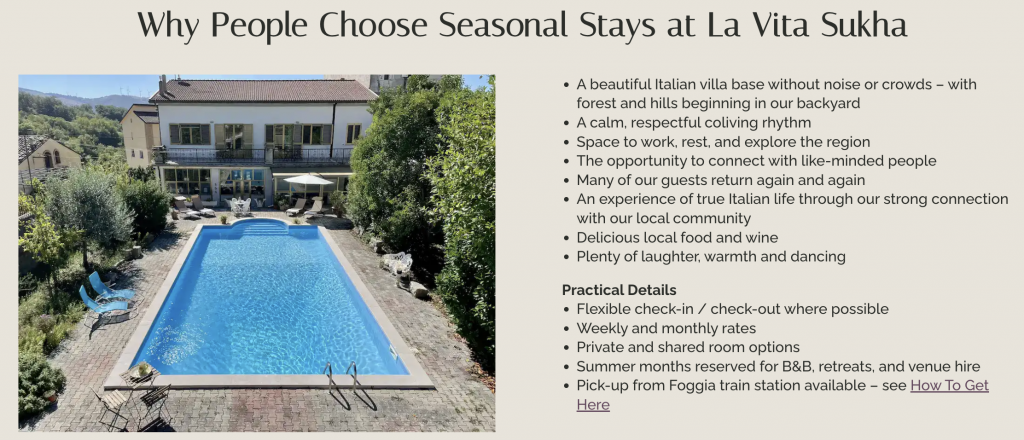
- Choose accommodation that’s comfortable across weather shifts
- Be mindful of visa rules and your own practical constraints
If you need official info, always check the relevant visa guidance for your nationality. Start here: https://vistoperitalia.esteri.it/
The decision shortcut: pick based on what you need most
If you’re stuck, use this little cheat code.
Choose 2 weeks if…
- You need a break, not a reset
- You’re testing whether seasonal stays Italy even suits you
- Your life doesn’t allow longer right now
- You want a “trial run” without committing
Choose 1 month if…
- You want the benefits of slow living to actually land
- You want focus and real rest
- You want to build a routine, not just have a trip
- You want a meaningful but manageable lifestyle reset
Choose 3 months if…
- You’re ready for deeper change
- You want to truly live somewhere, not visit
- You’re exploring long-term possibilities
- You want integration, not novelty
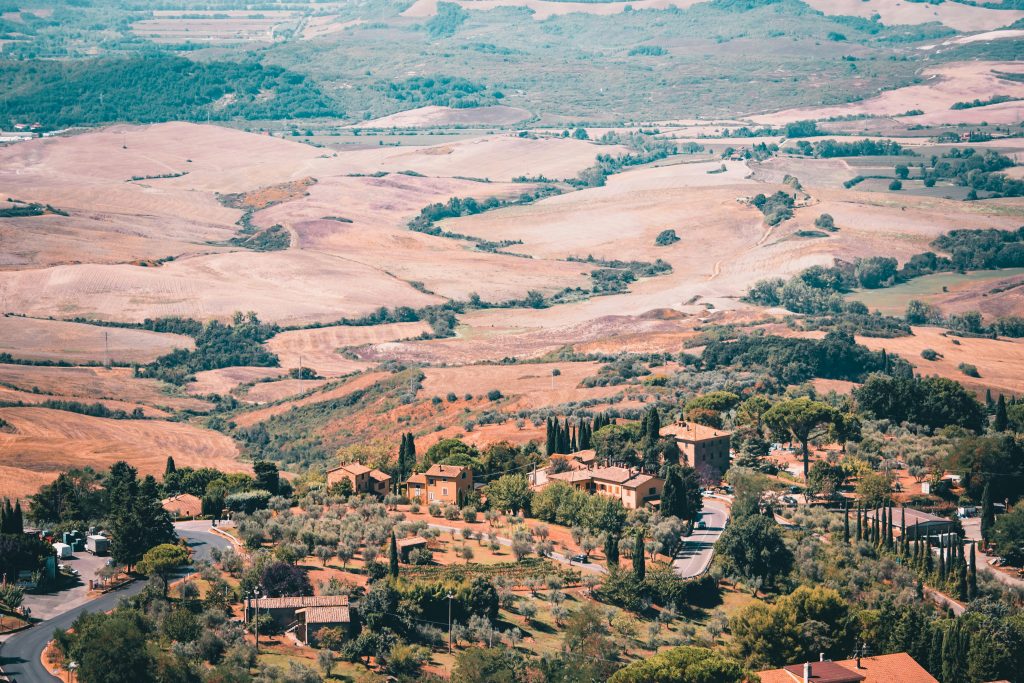
A note on rural vs city (because it changes the equation)
In cities, two weeks can feel full – you’re stimulated, there’s a lot to do, and convenience is high.
In rural areas, two weeks can feel like you’re just beginning to exhale.
So if your seasonal stay in Italy is in a rural setting (especially inland), I generally recommend:
- 1 month if you can
- 2 weeks if you must
- 3 months if you want the deepest benefits
Rural stays reward time.
If you’re curious about whether rural coliving is for you, this post helps you self-select: https://lavitasukha.com/coliving-southern-italy-who-its-for/
If you’re looking for a seasonal stay base in southern Italy
La Vita Sukha offers seasonal stays in rural Puglia for people who want a calm base for remote work, slow living, and a more grounded rhythm – without heavy programming or forced community energy.
You can explore Seasonal Stays here: https://lavitasukha.com/coliving-italy/
And if you’re travelling with a group (retreat, workshop, or team offsite), venue hire is here: https://lavitasukha.com/venue-hire-italy/
Related reads:
- https://lavitasukha.com/slowing-down/
- https://lavitasukha.com/coliving-vs-hostels/
- https://lavitasukha.com/our-blog/
Final thought: the “right” length is the one you’ll actually enjoy
There’s no gold star for staying longer if you’ll spend the whole time stressed about emails, money, or what’s happening back home. Two weeks can be enough to breathe. One month can be enough to reset. Three months can be enough to remember who you are when you’re not rushing.
Choose the duration that gives you the most ease – and then let Italy do what it does best: bring you back to yourself, one long lunch at a time.