

A team offsite in Italy can be one of the highest-leverage things you do all year…if the venue and logistics make it easy for people to focus, connect, and actually get work done.
The mistake many teams make is choosing a place that looks incredible, then discovering it isn’t built for meetings, reliable Wi-Fi, or group rhythm.
This guide is designed for founders, team leads, and organisers planning a small-to-mid-size company gathering: strategy days, creative sprints, leadership alignment, or a focused “work + reset” week.
It’s not about fluffy promises — it’s about what makes an offsite run smoothly, feel good, and produce real outcomes.
Why a team offsite in Italy works so well for modern teams
Most teams don’t need more hours on Zoom. They need:
- Uninterrupted thinking time
- Fewer distractions
- Better decision-making
- A setting that makes collaboration feel natural again
A well-planned team offsite in Italy creates space for deep work and human connection…without forcing it. Italy also tends to deliver what teams actually want: great food, beautiful environments, and a sense of “we’re somewhere different” that helps people step out of daily patterns.
If you’re weighing regions and travel planning, ENIT and the official Puglia portal can be useful for getting your bearings:
The 5 venue factors that make—or break—a team offsite in Italy
When you book a team offsite in Italy, you’re not just booking bedrooms – you’re booking the conditions for focus. These are the five factors that matter most.
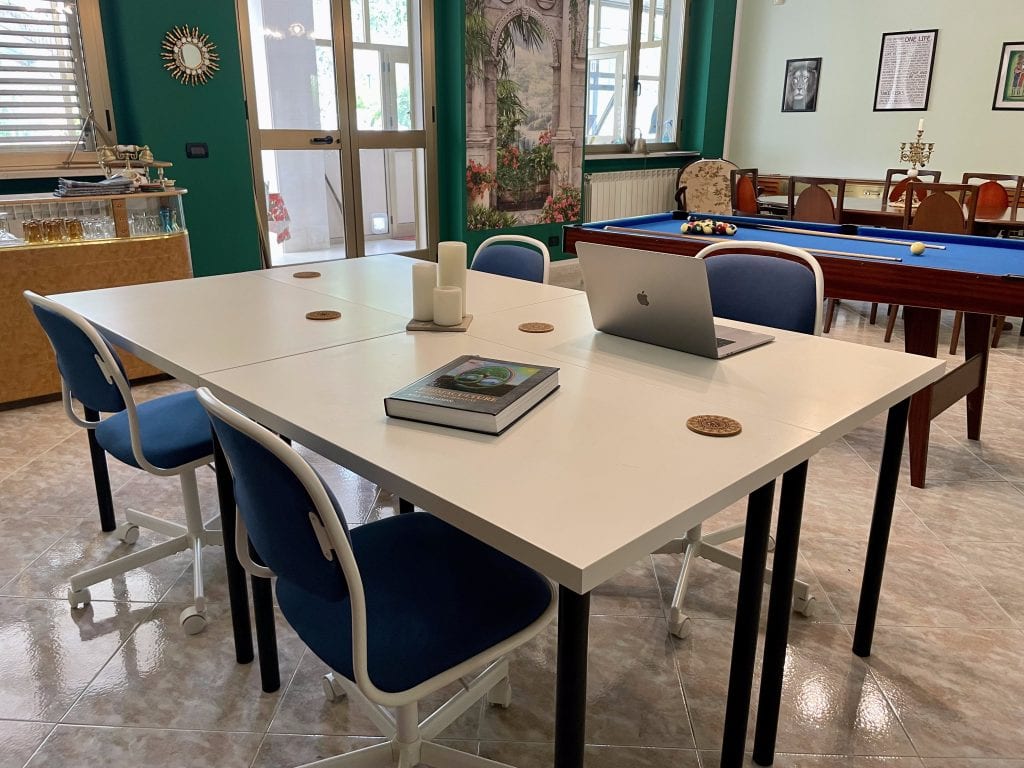
1. A real workspace (not a dining table “that can be used for meetings”)
Ask for:
- A dedicated meeting room or a comfortable indoor space that can be set up properly
- Chairs people can sit in for hours
- Good lighting (natural light is a bonus)
- Enough sockets and extension options
- Acoustic comfort (echo-y rooms can be surprisingly draining)
If the “workspace” is vague, your team offsite in Italy will feel improvised – and the work will inevitably suffer.
2. Reliable Wi-Fi across the areas you’ll actually use
For any corporate offsite in Italy that includes work blocks, Wi-Fi is non-negotiable.
Ask:
- Typical download/upload speeds
- Router location and signal coverage (meeting space + bedrooms)
- What the backup plan is if something fails
Even if your schedule is mostly offline, strong internet will still reduce anxiety. People relax when they know they could handle something urgent if needed.
3. Simple logistics: exclusive use, clear boundaries, and easy flow
Exclusive use often matters more for teams than they expect. It reduces friction around:
- Privacy (calls, sensitive conversations)
- Noise
- Shared facilities
- Awkward “we’re at work but other guests are sunbathing next to us” dynamics
If you want a contained, focused team offsite in Italy, prioritise a venue designed for groups, not just holiday stays.
4. Bedrooms that actually support rest
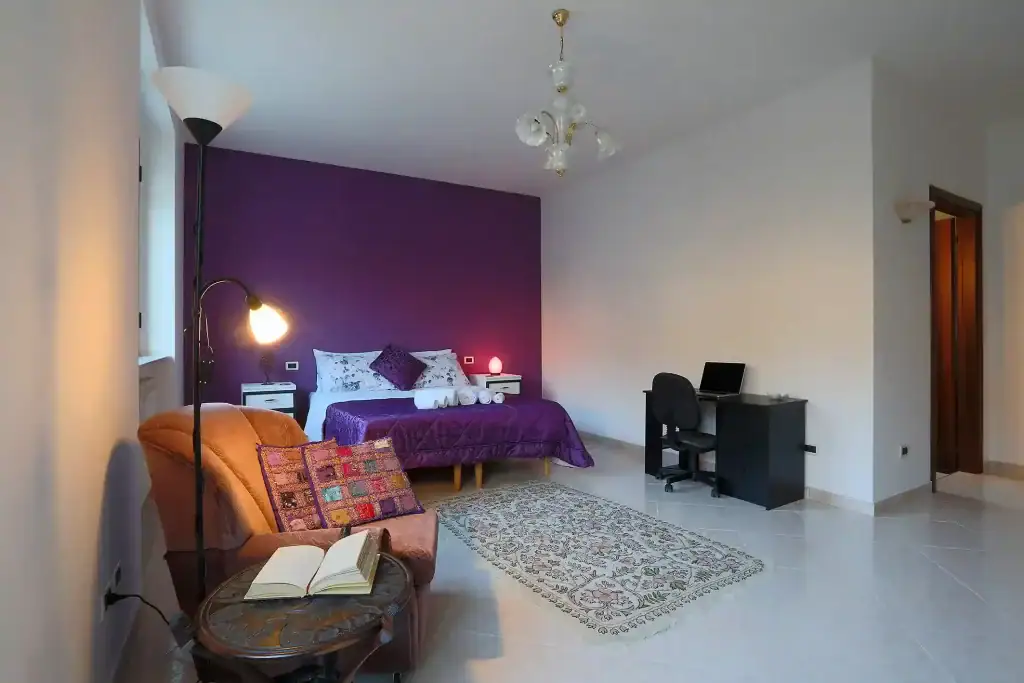
The biggest hidden offsite killer: poor sleep.
Ask for:
- A room list and bed types (can they split doubles into twins?)
- Bathroom count and whether any are en-suite
- Heating/AC depending on season
- Quiet hours and general sound insulation
- A team that sleeps well collaborates better. It sounds obvious, but it’s routinely overlooked.
5. Food that reduces decision fatigue
For a team offsite in Italy, food isn’t just nourishment – it’s time management.
If you can, choose:
- Catered meals, a chef option, or a reliable catering partner
- A clear plan for coffee/tea, snacks, and hydration
- Dietary flexibility (vegan, gluten-free, etc.)
When meals are sorted, everything else gets easier.
A simple 3–5 day agenda template that works
Here’s a structure that suits most teams and keeps a team offsite in Italy from turning into either a non-stop meeting marathon or a week of vague “bonding” with no outcomes.
Day 1: Arrival + orientation (light work only)
- Arrivals, room allocation, settling in
- A short “why we’re here” circle (30–45 mins)
- Dinner + early night
Tip: Don’t schedule heavy work on arrival day. People are travel-tired.
Day 2: Deep work + strategy
- Morning: big-picture review (wins, challenges, priorities)
- Afternoon: focused work blocks (small groups)
- Late afternoon: walk / pool / decompression
- Evening: relaxed dinner
Day 3: Decisions + planning
- Morning: decision-making sessions
- Afternoon: roadmap, owners, next steps
- Optional evening: low-key celebration (no forced “team games”)
Day 4 (optional): Build + create
Ideal for creative teams, content planning, product sprints, or leadership alignment.
- Morning: build session
- Afternoon: open space time (people choose what they need)
- Evening: dinner + unwind
Day 5 (optional): Workation-style wrap + departures
- Short wrap session + commitments
- Departures throughout the day
This kind of schedule is why a team offsite in Italy can feel both productive and genuinely restorative…without anyone having to perform.

The questions to ask any venue before you book
Copy/paste these into your enquiry for a team offsite in Italy:
- Do we have exclusive use of the property?
- Where do meetings happen and how is the room set up?
- Can you share Wi-Fi speeds and coverage details?
- Are there quiet work areas for solo focus/calls?
- Can beds be configured as twins?
- How many bathrooms are there and what’s the layout?
- What’s included in the price vs extra (cleaning, heating/AC, local taxes, deposits)?
- What catering options do you offer and how flexible are dietary requirements?
- Who is our point of contact during the stay?
- What’s the transfer route like from the nearest airports, and do you help arrange transport?
Clear answers to these are a strong sign the venue understands corporate offsite Italy needs.
Choosing the right location: don’t underestimate travel time
Italy is worth it – but you must plan realistically:
- Choose the nearest airport(s)
- Arrange transfers in advance
- Stagger arrivals if needed
- Schedule the first day lightly
A rural setting can be a huge advantage for focus (less distraction, better sleep, deeper work blocks). It’s also why getting transfers right is part of making a team offsite in Italy feel seamless rather than tiring.
Adding facilitation (optional, not compulsory)
Some teams arrive with a clear agenda and just need the environment. Others benefit from light facilitation – not therapy, not “trust falls” – just someone helping the group:
- Stay on track
- Make decisions cleanly
- Hear quieter voices
- Finish with clear next steps
If you offer facilitation as an add-on, it can be positioned simply: “optional support if you’d like a lightly-held structure.” No big claims.
Hosting a team offsite in Italy at La Vita Sukha
If you’re looking for a villa that supports real work (not just beautiful downtime), you can explore venue hire in Italy at La Vita Sukha here: https://lavitasukha.com/venue-hire-italy/
And if part of your team wants to extend the trip, perhaps arriving early to work remotely, or staying on to decompress – the Seasonal Stays option is here: https://lavitasukha.com/coliving-italy/
Related reads: