
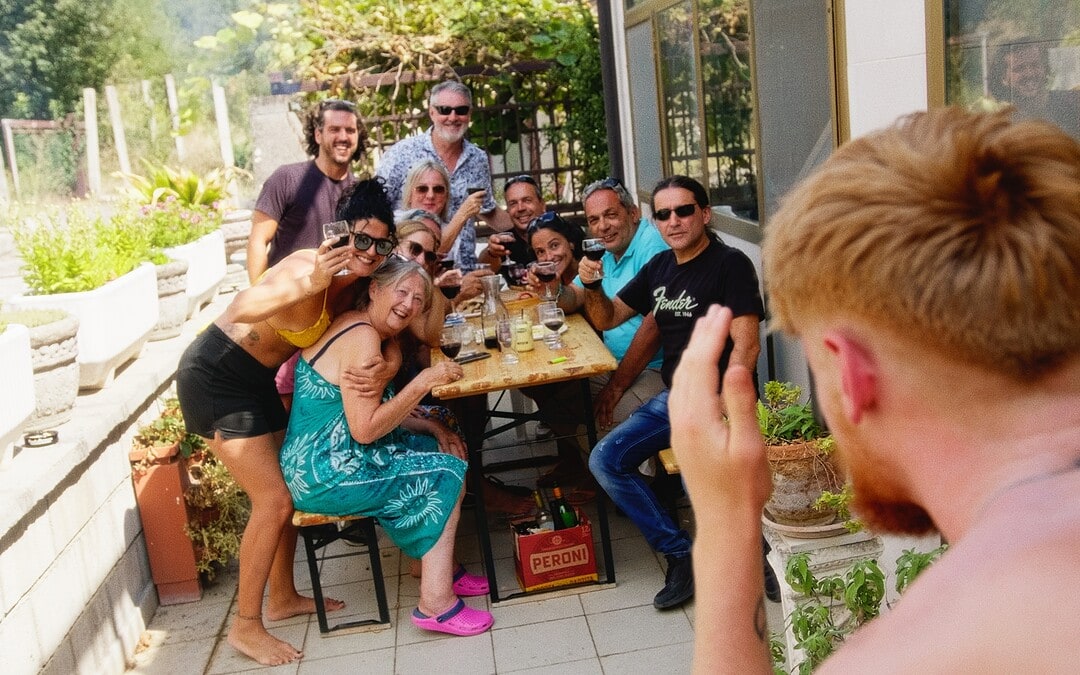
If you have been exploring community living vs coliving, you may have discovered that the internet sometimes uses these terms as though they are interchangeable.
They are not.
They can overlap, certainly. Both involve living near other human beings, sharing some spaces and occasionally wondering who has moved your favourite mug.
But coliving and community living usually begin from different places.
Coliving often begins with accommodation.
Community living usually begins with intention.
That does not mean one is deeper, kinder or morally superior. It simply means they offer different levels of commitment, participation and responsibility.
Understanding that difference can save you from booking a quiet remote-work stay when you secretly wanted weekly community circles. It can also stop you joining a highly involved shared-living project when what you really wanted was Wi-Fi, pleasant company and the freedom to disappear into your room with a book.
Both desires are completely reasonable.
What is coliving?
Coliving usually means renting a private or shared bedroom in a property with communal areas such as:
- A kitchen
- Living and dining rooms
- Coworking or desk space
- Gardens, terraces or leisure areas
- Sometimes organised meals or social events
Most coliving spaces handle practical matters such as utilities, internet and cleaning within one monthly or weekly price.
The appeal is straightforward. You arrive, unpack and begin living without setting up electricity contracts, buying furniture or negotiating a twelve-month rental agreement in a language you barely speak.
This is particularly useful for:
- Remote workers
- Digital nomads
- People between homes
- Slow travellers
- Anyone trialling life in another place
- People who would like company without sacrificing independence
In many forms of coliving Italy, guests stay for several weeks or months, work remotely and share some everyday moments without committing to a long-term collective project.
You may cook together one evening and barely see one another the next day.
Nobody files a missing-person report because you skipped breakfast.

What is community living?
Community living is generally more intentional and participatory.
The people involved are not simply sharing a building. They are choosing to create some form of ongoing life together.
That might include:
- Shared values or a common purpose
- Regular meals or gatherings
- Collective projects
- Shared decision-making
- Mutual support
- Long-term commitment
- Responsibility for land, buildings or communal systems
- Agreed ways of managing conflict and contribution
Some communities share finances or ownership. Others do not.
Some live on one piece of land. Others are spread across houses in the same village or neighbourhood.
Some hold weekly meetings with beautifully facilitated processes. Others operate through WhatsApp, raised eyebrows and somebody eventually saying, “Right, are we planting these trees or not?”
There is no single model of community living Italy or elsewhere. The important difference is that community is not merely an amenity included in the rent.
It is something people actively help create.
The biggest difference: service versus participation
A useful way to understand community living vs coliving is to ask:
Am I primarily a guest, or am I one of the people responsible for making this work?
In coliving, the host or operator usually provides the structure:
- The house exists
- The bills are handled
- The rooms are furnished
- The Wi-Fi is installed
- The booking has an arrival and departure date
You are expected to behave respectfully and look after shared spaces, but you are not normally responsible for the future of the project.
In community living, participation often goes further.
You may be involved in:
- Decisions
- Maintenance
- Gardening
- Cooking rotas
- Welcoming newcomers
- Financial planning
- Community events
- Resolving tensions
- Deciding why all the teaspoons have disappeared again
Coliving asks you to be a considerate housemate.
Community living may ask you to become a co-creator.
How much commitment is involved?
Coliving is usually temporary or flexible.
You might stay for:
- Two weeks
- One month
- A season
- Occasionally longer
There is often a clear beginning and end.
Community living tends to involve a longer horizon. Even when a community offers trial periods, the underlying question is often:
Could you imagine building a life here?
This does not necessarily mean signing away your earthly possessions and choosing a communal surname.
It may simply mean being willing to invest time, care and emotional energy into relationships that continue beyond one enjoyable summer.
If you are still exploring how long a slower stay might suit you, this guide can help: Seasonal Stays in Italy: Two Weeks, One Month or Three Months?
Privacy exists in both, but the expectations differ
One persistent myth is that community living means everybody must constantly be together.
No.
Introverts would have staged a rebellion centuries ago.
Healthy community should allow for:
- Private bedrooms or homes
- Time alone
- Different social needs
- Personal boundaries
- Freedom to opt out of some activities
The difference is that community living usually includes a stronger expectation that you will participate at least some of the time.
Coliving may allow you to remain almost entirely independent. You can work, cook and rest according to your own rhythm while enjoying occasional connection.
Community living asks a more demanding question:
How will your presence contribute to the lives of others?

That can be beautiful.
It can also be inconvenient, because other people occasionally require support at precisely the moment you had planned to watch something mindless while wearing very old trousers.
This is where theory meets humanity.
What about intentional community?
An intentional community is a more defined form of community living.
It usually involves people deliberately organising around shared values, aims or practices.
These might include:
- Ecological living
- Mutual support
- Cooperative ownership
- Spiritual practice
- Regenerative farming
- Intergenerational living
- Social change
- Shared livelihoods
Not every community-living situation is an intentional community.
A group of friends sharing a villa may have lovely relationships without any formal purpose.
A coliving house may develop strong connection without becoming a community project.
Labels matter less than honesty.
Problems begin when a place markets itself as a deeply connected community but operates like a short-term rental with one compulsory pizza night.
Equally, not everyone wants a formal intentional community. Many people are looking for what we might call community-light:
- Familiar faces
- Shared meals now and then
- Mutual care
- Space to contribute
- No obligation to discuss every household decision for four hours
A perfectly respectable preference.
Which one might suit you?
Coliving may suit you if:
- You want flexibility
- You are trying shared living for the first time
- You work remotely
- You value privacy and independence
- You want connection without major commitment
- You are testing life in Italy before making bigger decisions
For a more detailed fit check, read: Coliving Southern Italy: Who It’s Perfect For
Community living may suit you if:
- You want deeper, longer-term relationships
- You are willing to contribute regularly
- Shared purpose matters to you
- You can communicate through disagreement
- You want to build something with others
- You understand that belonging includes responsibility
Community living is not simply coliving with more group dinners.
It asks for maturity, honesty, patience and the ability to replace the toilet roll without seeking public recognition.
Can coliving become community?
Sometimes.
When people stay longer, participate willingly and form meaningful relationships, a coliving space can begin to feel community-like.
But this cannot be forced.
You cannot guarantee belonging in a booking confirmation email.
Community develops through:
- Time
- Repeated contact
- Trust
- Shared experience
- Mutual effort
- Repair after misunderstandings
- A sufficient number of meals involving bread
The healthiest approach is often to create conditions where connection can grow without announcing that every guest will leave with twelve lifelong friends and a renewed faith in humanity.
Some will connect deeply.
Some will enjoy friendly conversation and continue their journey.
Both outcomes are valid.
Where La Vita Sukha currently sits

La Vita Sukha presently offers seasonal stays and coliving rather than membership in a formal intentional community.
Guests come for a defined period and retain their independence. There is room for shared meals, conversation, practical cooperation and natural connection, but no heavy programme or requirement to perform togetherness.
At the same time, a longer-term possibility is being explored.
Could a small core community eventually form around the villa?
Could a wider circle live in restored homes across Roseto Valfortore?
Could seasonal guests, future residents, local people, land-based projects and rural livelihoods gradually become part of one interconnected ecosystem?
We do not yet know exactly what that model will look like.
And frankly, any community project claiming to have solved human relationships before the people have even arrived deserves a gentle side-eye.
At La Vita Sukha, we’re exploring how seasonal stays, shared living, and rural village life can become part of a wider conversation around community and regeneration – without rushing the process or pretending it’s all neatly figured out.
You can read more about the evolving vision here: Intentional Community in Italy: Why We’re Exploring It Slowly
Seasonal stays as a bridge between the two
Seasonal stays can offer a useful middle ground in the community living vs coliving conversation.
They provide enough time to experience:
- Shared kitchens
- Different personalities
- Rural rhythms
- Informal cooperation
- The pleasure of company
- The relief of closing your bedroom door
You begin to learn what you genuinely enjoy about shared living, rather than what you imagine you might enjoy while looking at photographs of attractive people gardening together.
Perhaps you love communal meals but need quiet mornings.
Perhaps you enjoy helping outdoors but would rather swallow a fork than attend regular governance meetings.
Useful information.
You can explore the current Seasonal Stays offering here: Seasonal Stays at La Vita Sukha
Questions to ask before choosing any shared-living experience
Whether you are considering coliving or community living, ask:
- What level of participation is expected?
- How much privacy will I have?
- Are meals or activities optional?
- How are decisions made?
- How are disagreements handled?
- Who is responsible for cleaning and maintenance?
- Is this primarily accommodation, a social experience or a long-term community?
- What happens if I discover that I strongly dislike group singing?
Clear answers prevent resentment.
Vagueness may sound romantic at first, but it becomes less enchanting when six people have six different ideas about who should clean the kitchen.
Final thought
The question of community living vs coliving is not really about which model is better.
It is about what kind of connection, responsibility and commitment fits your life right now.
You may want a comfortable shared home for a season.
You may be ready to help build something long-term.
You may sit somewhere between the two, curious about community but unwilling to hand your entire calendar over to a vegetable-growing committee.
There is room for all of these.
The best place to begin is with honesty.
And possibly your own clearly labelled mug.