
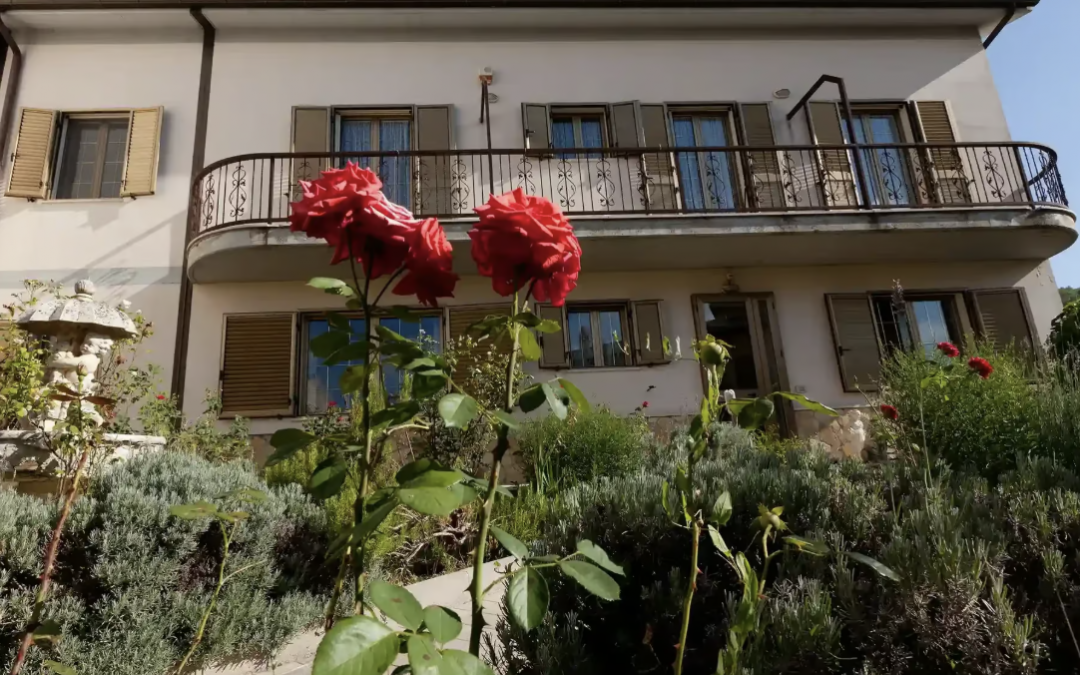
If you’ve ever searched intentional community Italy, there’s a good chance part of you is craving something deeper than a nice house in the countryside.
You may be looking for connection. Shared values. A slower rhythm. People who don’t look at you strangely when you say things like, “I think modern life might be making us all a tiny bit feral.”
Relatable.
But intentional community is also one of those phrases that can mean wildly different things depending on who is using it.
For some people, it means eco-villages, shared land, group decisions, permaculture, and deep relational work.
For others, it means “I’d like to know my neighbours and occasionally share a meal without joining a committee about lentils.”
Both are valid. Although, for the record, lentil committees should be approached with caution.
At La Vita Sukha, we’re exploring intentional community in Italy slowly, honestly, and within the context of an existing rural village – not as a finished model, not as a promise, and definitely not as a commune by Tuesday.
First: La Vita Sukha is not a finished intentional community
Let’s be very clear from the start: La Vita Sukha is not currently a formal intentional community.
There is no membership process. No shared governance system. No compulsory morning chanting. No mysterious whiteboard with everyone’s emotional weather written on it.
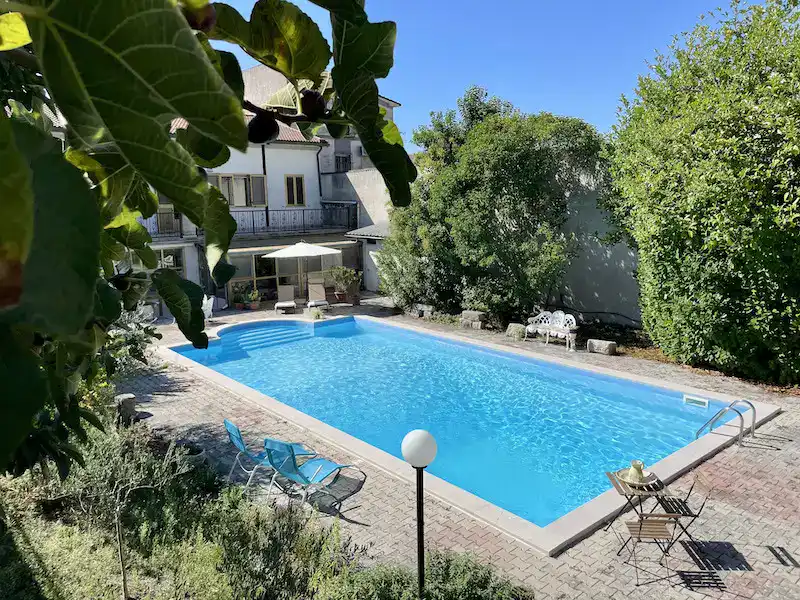
Right now, La Vita Sukha is a rural villa in southern Italy offering seasonal stays, coliving, retreats, venue hire, and group gatherings. But underneath those practical offerings, there is a bigger question quietly taking shape:
Could this become part of a wider community-led way of living in and around an existing village?
That question feels alive. It also feels complex. And anything complex deserves time, not a dramatic sales page with stock photos of people holding vegetables.
What do we mean by intentional community?
At its best, intentional community is simply a group of people choosing to live with more shared purpose, mutual support, and relationship than mainstream life often allows.
That might include:
- Shared meals
- Shared values
- Shared land or projects
- Practical cooperation
- Emotional maturity
- Conflict skills
- A sense of belonging that does not depend on everyone being the same
Notice that last bit. Important.
Real community living Italy style is not about finding a group of identical people who all agree on compost systems, dinner time, and the correct way to stack mugs. That way lies madness. And probably a passive-aggressive mug rota.
Community is less about sameness and more about willingness: willingness to show up, listen, contribute, repair, and stay human when things get slightly awkward.
Because they will. They always do. Someone will leave crumbs near the toaster. This is where the spiritual path begins.
Why explore community inside an existing village?
Many intentional communities are built as separate eco-villages or land projects. That can be beautiful, and there are many inspiring examples across Europe.
But La Vita Sukha is asking a slightly different question:
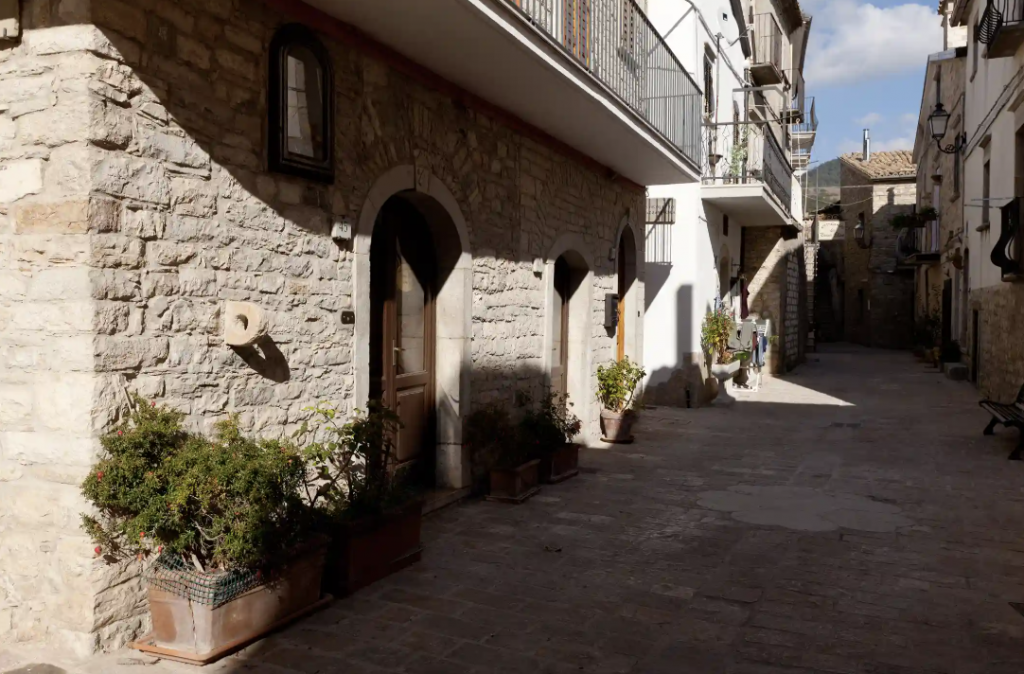
What if intentional community in Italy could grow within an existing rural village, rather than apart from it?
This matters because many small villages in Italy are already full of history, relationships, skills, traditions, empty homes, local knowledge, and community memory. They are not blank canvases waiting for outsiders to arrive with mood boards and “regeneration concepts.”
Roseto Valfortore is not a project. It is a real place, with real people, real rhythms, and a culture that deserves respect.
So for us, the dream is not to create a bubble. The dream is to explore how seasonal stays, shared living, and long-term community might eventually support wider rural regeneration Italy efforts in relationship with the village.
At La Vita Sukha, we’re exploring how seasonal stays, shared living, and rural village life can become part of a wider conversation around community and regeneration – without rushing the process or pretending it’s all neatly figured out.
Seasonal stays as a gentle doorway
Not everyone who is curious about intentional community Italy is ready to move into one. In fact, most people probably shouldn’t leap straight from “I’m lonely in the city” to “I now share tools, tomatoes, and decision-making with twelve people.”
That is a lot. Please hydrate.
This is where coliving and seasonal stays can be useful. A seasonal stay offers a gentle middle ground:
- Long enough to feel a place
- Short enough not to uproot your entire life
- Shared enough to experience connection
- Spacious enough to keep your independence
For many people, coliving Italy is not just about accommodation. It’s a way to test a different rhythm: working remotely, cooking more, walking more, sharing space, having conversations that go beyond “so what do you do?”
You can explore La Vita Sukha’s Coliving and Seasonal Stays here: Coliving and Seasonal Stays at La Vita Sukha
Community is not forced togetherness
This feels important.
Community does not mean everyone has to eat every meal together, attend every activity, or share their deepest wounds before dessert.
At LVS, the kind of community we’re interested in is softer and more adult than that. Think:
- Connection without pressure
- Shared living without performance
- Kindness without forced intimacy
- Independence with mutual care
- Space to be alone and space to gather
Because honestly, some days the most community-minded thing you can do is quietly make your lunch, wipe the counter, and not process your entire childhood in the kitchen while someone is trying to boil pasta.
Boundaries are not the opposite of community. They are what make community sustainable.
Why rural regeneration belongs in this conversation
If intentional community in Italy is only about the people living inside one house, it stays too small.
The bigger LVS vision is about place.
Long term, the dream includes a small core community at the villa, a wider circle of people living in restored homes in Roseto Valfortore, regenerative farming, local livelihood revival, artisan skills, products from the land, workshops, retreats, and community-led gatherings.
Not all at once. Not in a “colour-coded five-year plan laminated by someone suspiciously efficient” way.
More like: one honest step, then another – and lots of interaction with our local community to ensure we are working with them, not for them.
Rural regeneration is not about swooping in to save a village. Please no capes. It is about relationship, listening, participation, and asking what might support life here over time.
That might mean:
- Bringing longer-stay guests in shoulder seasons
- Supporting local bars, restaurants, shops, and services
- Creating work for local chefs, drivers, guides, builders, growers, and artisans
- Restoring homes respectfully
- Encouraging remote workers to become part of the local rhythm
- Exploring ways land, food, and community can support one another
If you want to read more on this thread, this post goes deeper: Rural Regeneration Italy: How Remote Workers and Slow Travel Can Support Small Villages
The honest uncertainty is part of the process
There is something very tempting about pretending to have everything figured out.
It would be impressive to say: “Here is the exact LVS community model, fully formed, laminated, and emotionally regulated.”
But that would not be true.
The truth is more alive than that.
We are exploring. Listening. Testing. Learning what works. Learning what doesn’t. Watching who is drawn here. Paying attention to the relationship between the villa, the land, the village, and the people who come.
And that uncertainty is not a weakness. It might actually be the most honest foundation possible.
Because community cannot be manufactured like flat-pack furniture. You can create the conditions. You can invite the right people. You can build structures slowly. But the real thing grows through trust, time, and a lot of small ordinary moments.
Also possibly soup.
Who this vision might speak to
This evolving version of intentional community Italy may resonate if you are:
- Curious about community, but not ready to join a formal one
- Interested in rural village life, not just private countryside escape
- A remote worker wanting more connection and less isolation
- Drawn to regenerative living, but allergic to perfectionism
- Exploring whether shared living might suit you
- Interested in belonging, but still very attached to your own room and quiet time
Same. Personal space is sacred.
It may not be for you if you want a fully established community with clear membership, shared ownership, and formal structures already in place. Those places exist, and they may be a better fit.
LVS is more of a living question at this stage.
Why slow matters
The slow approach can look inefficient from the outside. Modern culture loves speed: launch it, scale it, brand it, monetise it, put it in a funnel, make a webinar.
But community is not a funnel. Thank goodness.
A slower approach gives space for:
- Real relationships
- Local trust
- Cultural respect
- Better decisions
- Fewer saviour fantasies
- Less accidental weirdness
And frankly, if the whole point is to explore a more human way of living, rushing the process would be a bit…on the nose.
A gentle invitation
If you are curious about intentional community in Italy, seasonal stays can be a beautiful way to begin. Not as a commitment. Not as a test you have to pass. Just as an experience of slower, more connected living in a rural Italian village context.
Come for a few weeks. Work remotely. Cook. Walk. Rest. Meet people. Notice what shared living brings up in you. Notice what rural life gives you. Notice what you miss, what you love, and what feels possible.
You can explore Coliving and Seasonal Stays here: Coliving and Seasonal Stays at La Vita Sukha
And if you are an organiser looking for a place to host a retreat, gathering, or group experience connected to these themes, Venue Hire is here: Venue Hire at La Vita Sukha
Related reads:
- Coliving Southern Italy: Who It’s Perfect For
- Slow Living Italy: What It Really Looks Like
- Rural Living in Italy: What to Expect
Final thought
The dream of intentional community is really the dream of not doing life alone.
But the LVS version is not about escaping the world or building a perfect little bubble on a hill. It is about asking whether community can grow in relationship with an existing village, with land, with local culture, and with the messy, beautiful reality of human beings.
Slowly. Honestly. With humour. With care.
And ideally with everyone wiping the counter after making toast.