
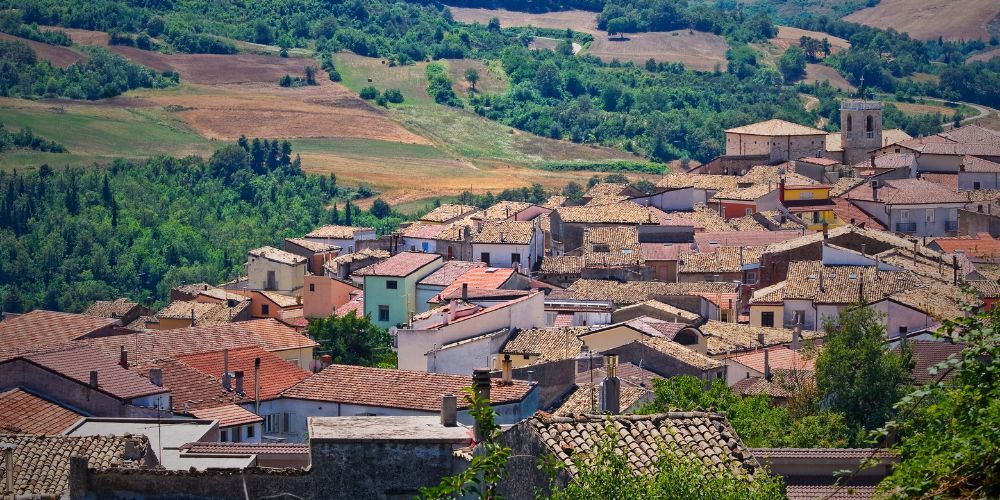
If you’re dreaming about rural living in Italy, you’re not alone. A lot of people are feeling the pull toward quieter places, more grounded routines, and a life that feels less reactive. But moving toward (or even trialling) life in the countryside is not just about beautiful views and cobbled streets.
This post is a practical guide to what rural living Italy actually involves – the good parts, the less glamorous parts, and how to approach it sustainably without turning it into an all-or-nothing lifestyle project.
Whether you’re considering a seasonal stay, a trial period, or a future move, the goal here is simple: help you make a grounded decision.
Why rural living in Italy appeals to so many people right now

The appeal of rural living Italy usually isn’t just “I want a prettier place.” It’s often deeper than that. You might want:
- Less noise and more space
- To reduce stress and constant urgency
- Your day to feel more human
- A stronger relationship to food, land, and seasons
- A lifestyle that costs less emotionally (and often financially)
Italy has a lot to offer here: strong local culture, food traditions, slower rhythms in smaller towns, and many regions where countryside living is still very much a real, lived thing – not just a fantasy sold online.
What rural living in Italy is actually like (beyond the postcard)
Let’s start with the truth: living in rural Italy can be beautiful, calming, and deeply rewarding – and it can also be inconvenient, slow, and occasionally frustrating. As with many things in life, both can be true at the same time.
What’s often better than expected
- Sleep quality (less noise, darker nights)
- Daily rhythm (fewer distractions, less rushing)
- Food culture (fresh, nutrient-rich ingredients, local shops, seasonal produce)
- Nature access (walks, views, air, sky…all part of normal life)
- Mental spaciousness (less overstimulation)
What’s often harder than expected
- Transport logistics (especially without a car)
- Groceries and shopping (less immediate convenience)
- Admin and services (things can move slowly)
- Internet variability (depends a lot on location/property)
- Romanticising it (expecting a magical reset without changing habits)
This is why a trial period helps. For many people, a seasonal stay is the best way to experience rural living Italy before making bigger decisions.
The biggest mindset shift: rural life rewards patience
One reason people thrive in rural living Italy is that they stop expecting everything to work like a city. Rural life runs on different timelines – socially, practically, and emotionally.
That doesn’t mean “chaos” or “nothing works.” It means:
- Relationships matter more
- Local knowledge matters more
- Flexibility matters more
- Planning ahead matters more
If you approach rural life expecting instant convenience, it can feel irritating. If you approach it as a different operating system, it starts to feel surprisingly supportive.
A practical checklist: what to consider before trying rural living in Italy
If you’re seriously exploring rural living Italy, these are the things to check first.
1. Internet and phone signal
If you work remotely, this is essential. Ask about:
- Wi-Fi speed and stability
- Signal coverage inside the house
- Mobile reception (as a backup)
Don’t assume “Italy = fine everywhere.” Rural areas vary, and property layout matters too.
2. Heating, cooling, and seasonal comfort
A place can be stunning and still be uncomfortable. Check:
- Heating type (radiators, pellet stove, AC, etc.)
- Insulation quality
- Cooling in summer
- Whether utility costs are included (for longer stays)
Comfort has a huge effect on whether living in rural Italy feels restorative or draining.
3. Transport and access
Can you manage without a car? Sometimes yes, often no (or not easily). Ask:
- Nearest airport/train station
- Transfer options
- Walkability to essentials
- Whether hosts help with lifts/taxis/local contacts
4. Groceries and food rhythm
In rural settings, food becomes more intentional (which can be lovely), but it helps to know:
- Nearest supermarket and opening hours
- Local shops/markets
- Whether delivery exists
- How often you’ll likely shop
This is one of the first places people feel the difference between visiting and rural living Italy.
5. Workspace and quiet
If you’re working while staying in the countryside:
- Check for a proper desk/chair
- Ask about quiet zones
- Ask about house rhythm if shared
Rural life can be ideal for focus, but the accommodation must support it.
6. Social reality
Some people imagine rural life as lonely; others imagine instant village belonging. Usually, the truth is somewhere in the middle. Here’s a healthier expectation:
- Connection builds slowly (remember, most people in rural Italy have grown up together)
- Warmth matters more than “networking”
- Your daily habits shape your experience
How to do rural living in Italy sustainably (without overwhelm)
You don’t need to become a full-time homesteader overnight to live more sustainably. In fact, trying to do everything at once is one of the fastest ways to burn out.
A more realistic approach to sustainable living Italy is to start with what reduces friction and supports your actual life.
1. Start with your home habits – small shifts matter:
- Cooking simple meals more often
- Reducing unnecessary purchases
- Reusing jars/containers
- Drying clothes naturally when possible
- Being mindful with heating/cooling use
- Buying local produce when available
This is already a meaningful version of sustainable living Italy.
2. Learn the seasons (instead of fighting them)
Rural life gets easier when you stop expecting the same routines year-round. In many parts of Italy, the seasons shape:
- What people eat
- How homes are used
- Social rhythms
- Energy levels
- Gardening and land work
This is part of what draws people toward regenerative living Europe ideas in the first place: life starts to feel more cyclical, less mechanical.
3. Build skills slowly
If you’re interested in permaculture Italy or growing food, start small:
- Herbs first
- One or two vegetables
- Learning local climate patterns
- Observing sun/shade/wind before “designing everything”
Mediterranean climates can be abundant, but they also have real constraints (summer heat, dry periods, water management). Slow learning is not failure – it’s the smart path.
4. Choose place over performance
A lot of people come into rural life with pressure to “do it properly”perfect garden, self-sufficiency, total lifestyle transformation.
A better goal: create a life that is more grounded, more sustainable, and more liveable than before.
That’s enough. And it’s usually what lasts.
Rural living in Italy as a trial, not a life sentence
One of the most helpful things to remember: trying rural living Italy does not have to mean committing to forever. You can:
- Test it for a few weeks
- Try a shoulder-season stay
- Work remotely from a countryside base
- Use it as a reset and learning period
This is where seasonal stays can be incredibly useful. They let you experience the rhythm of a place – not just the highlights – while keeping your options open.
A grounded path: slow living first, sustainability second
If you’re feeling drawn to rural living Italy, you do not need to start by “saving the land” or reinventing your whole life. Start here:
- Choose a place that supports rest and focus
- Experience the rhythm of the countryside
- Notice what feels good and what feels hard
- Make a few sustainable changes that fit your real capacity
- Let the next steps emerge from experience, not fantasy
That’s often how genuine rural regeneration Italy journeys begin – not with a grand plan, but with a slower, more honest relationship to place.
If you’d like to experience rural life in Italy before making bigger decisions
La Vita Sukha offers a grounded way to try countryside life in Puglia through seasonal stays – ideal for people who want to work remotely, slow down, and experience a more human rhythm without pressure.
You can explore the Seasonal Stays page here: https://lavitasukha.com/coliving-italy/
And if you’re an organiser looking for a countryside setting for a retreat, workshop, or team gathering, the venue hire option is here: https://lavitasukha.com/venue-hire-italy/
Related reads: