

Searching for remote work accommodation in Italy can be super exciting…until you arrive…and realise the Wi-Fi only works in the kitchen, the chair is a backbreaker, and the only “workspace” is the dining table next to the noisy espresso machine.
This post is a practical checklist you can use before you book. It’s designed for digital nomads, remote workers, founders, creatives, and anyone planning a workation in Italy or a longer seasonal stay.
It’s not about luxury – it’s about function, comfort, and the kind of ease that enables you to do your best work.

Why “remote-work-friendly” listings often disappoint
Lots of places say they’re remote-work-friendly. But “good for remote work” can mean:
- There’s technically Wi-Fi (somewhere)
- There’s technically a table
- Someone once answered an email from the property
For a real remote work accommodation Italy stay – especially more than a week – you need a few non-negotiables. These are the things that reduce friction and prevent your trip becoming an expensive productivity crash.
Remote work accommodation Italy: the 14-point checklist
1 Wi-Fi speed and stability (ask for both)
Don’t just ask “Do you have Wi-Fi?” Ask:
- For typical download/upload speeds
- Whether it’s stable for video calls
- Whether it reaches bedrooms and work areas
If you’ll be on calls, stability matters more than peak speed. A good WiFi accommodation in Italy will be able to answer clearly.
2 Signal coverage in the places you’ll actually work
Some villas have thick walls or multiple floors. Ask where the router is, and whether there are repeaters / mesh units. If the host sounds vague, assume you’ll be hotspotting.
3 A real desk setup (and chair comfort)
For remote work accommodation in Italy, “desk” should mean:
- Dedicated surface at the right height
- A chair you can sit in for hours
- Enough light (daylight is best)
If it’s a beautiful antique chair and a tiny table, your back will hate you by day three.
4 Enough sockets (and not all in one corner)
Ask if the workspace area has easy plug access. Extension cords can help, but it’s better when the set-up is designed for work.
5 Quiet zones (this matters more than people think)
If you’re sharing a house (coliving, guesthouse, or shared villa), ask:
- Are there designated quiet times?
- Where can you take calls without disturbing others?
- Can you work away from the main social areas?
A “quiet place to work in Italy” is gold if you’re writing, building, or doing deep focus tasks.
6 Phone signal and hotspot potential
Even with good Wi-Fi, you want to know: if the internet drops, can you hotspot? Rural areas vary. Ask what the phone signal is like with common providers.
7 Heating and cooling (seasonality is everything)
In spring and autumn, places can be chilly at night. In summer, heat can be intense.
Ask:
- Is heating included or extra?
- What kind of heating is it (radiators, pellet stove, AC units)?
- How does cooling work in hot months?
For long-term stays in Italy, comfort is a productivity factor.
8 Natural light and “vibe” of the workspace
This sounds fluffy, but it’s not. If you’re working for hours, you want:
- Decent daylight
- A space that feels calm
- Not a gloomy corner that drains you
9 Kitchen reality (especially for longer stays)
If you’re booking remote work accommodation Italy for 2–8 weeks, you will cook.
Ask:
- Is it fully equipped (sharp knives, pans, oven, etc.)?
- Is there space for your food?
- Any house rules around cooking times?
10 Coffee/tea basics and hydration
Remote work days run on hydration and easy fuel. If you’re rural, it’s useful to know what’s provided and what you should bring.
11 Grocery logistics (rural and small-town stays)
If you’re choosing rural Italy accommodation (often the best for focus), ask:
- Where’s the nearest supermarket?
- Do you need a car?
- Are there delivery options?
- Do hosts help coordinate lifts/taxis?
This is where rural stays differ from city stays — and why planning matters.
12 Laundry access (a dealbreaker for longer stays)
For seasonal stays Italy, laundry is not optional. Ask:
- Is there a washing machine
- How often can guests use it?
- Is drying easy (dryer, outdoor lines, dehumidifier)?
13 House rhythm: social vs quiet
This is especially important for coliving Italy style stays. Ask what the typical vibe is:
- Quiet and independent
- Social dinners
- Coworking vibe
- Mixed ages / mixed schedules
Neither is right or wrong – it’s just a case of what fits for you.
14 Cancellation flexibility (real life happens)
If you’re booking weeks or months, check:
- Deposit terms
- Cancellation policy
- Whether date changes are possible
A reasonable policy often signals a professional operation.
A quick “fit test” before you book
The best remote work accommodation in Italy depends on what you need most right now:
- Deep focus and output? Prioritise quiet, desk comfort, and stable Wi-Fi.
- Burnout recovery and nervous system calm? Prioritise nature, sleep quality, and a slower environment.
- Community and connection? Choose places with shared meals or intentional social touchpoints.
- Workation with exploration? Prioritise walkability, transport, and day-trip options.
Rural workations can be the secret weapon (if you plan well)
A rural workation in Italy can be wildly productive. Less noise, fewer distractions, better sleep, and more mental spaciousness.
The trade-off is logistics: groceries, transfers, and sometimes less redundancy with internet. But if you use the checklist above, rural can become your biggest advantage.
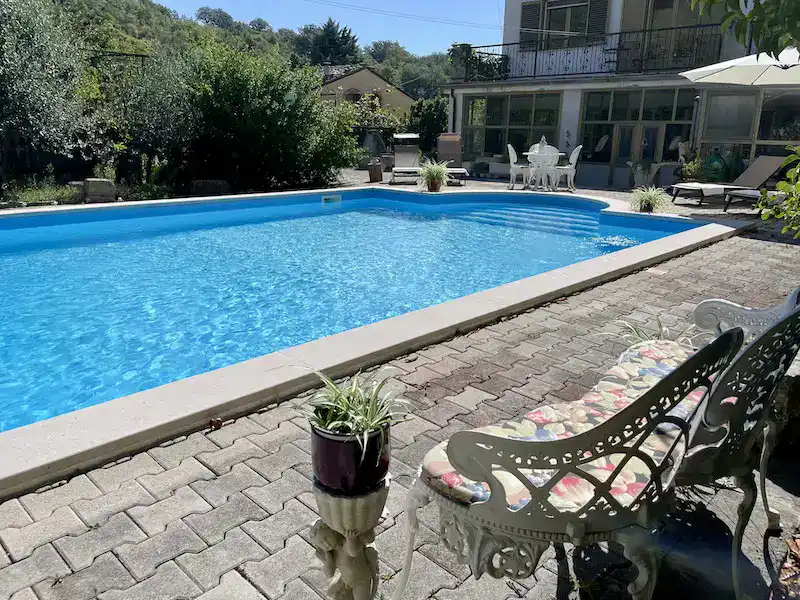
If you’re exploring a seasonal stay base in Italy
La Vita Sukha offers seasonal stays designed specifically for remote workers who want a calm, non-party environment in rural Puglia – with reliable Wi-Fi, dedicated workspaces, and the kind of quiet that makes deep work easier.
You can see the Seasonal Stays details here: https://lavitasukha.com/coliving-italy/
And if you’re an organiser considering bringing a team or group (offsite, retreat, workshop), the venue hire option is here: https://lavitasukha.com/venue-hire-italy/
Related reads: